Since its establishment in 1873, the Oji Group has continued to grow through the expansion of business fields for more than 150 years. While keeping abreast of the trends of the times, we have tackled changing social needs and evolved our business structure. In recent years, aiming for contribution to a sustainable society, we have been actively rolling out the technologies cultivated in our domestic business to the global market.
Trends in Oji Group paper, paperboard, and pulp output in Japan and overseas


 Pulp Production (Overseas)
 Paperboard Production (Overseas)
 Paper Production (Overseas)
 Paperboard Production (Japan)
 Paper Production (Japan)
 Sales
SalesHistory
Period of Foundation
1873 - 1909Birth of the Modern Paper Manufacturing Industry
The origin of the Oji Group dates back to the establishment of Shoshi Kaisha, a paper manufacturing company, advocated by Eiichi Shibusawa, the founder of the modern Japanese economy. Shoshi Kaisha was established in 1873, based on Shibusawa’s belief that the “paper and printing businesses are the source of civilization.” This company would eventually become Oji Paper and would underpin the growth of industry throughout the whole of Japan.
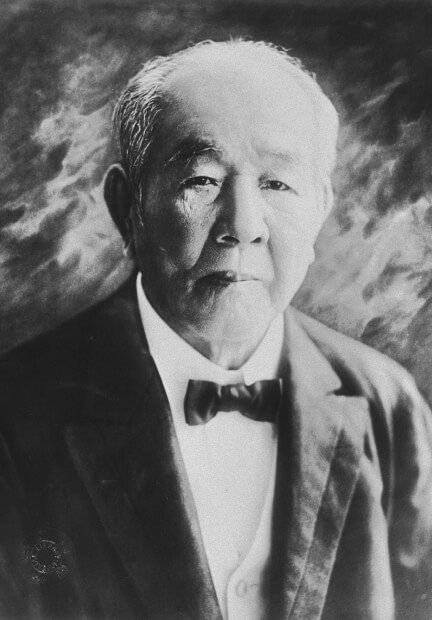
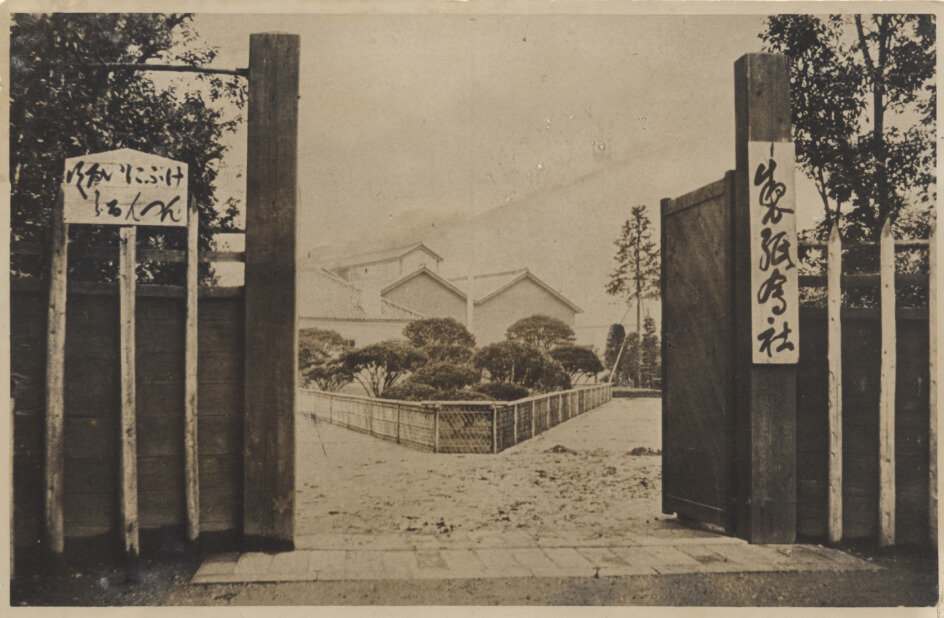
- 1873 Shoshi Kaisha established
- 1875 Mill completed in Oji, Tokyo that used rags as raw materials at that time
- 1876 Name of the company changed to Paper Manufacturing Company
- 1889 Keta Mill opened (Japan's first wood pulp manufacturing plant)
- 1893 Name of the company changed to Oji Paper
- 1899 Chubu Mill opened (for the production of newsprint)
Period of Establishment
1910 - 1945Establishment of a Domestic Supply Structure
To meet burgeoning demand for paper, we ventured to Hokkaido in search of the forests, water, and the vast land resources needed for paper manufacturing. We brought together the very best of technologies and opened the Tomakomai Mill. In doing so, we established a domestic supply structure for newsprint, breaking free from reliance on imports.
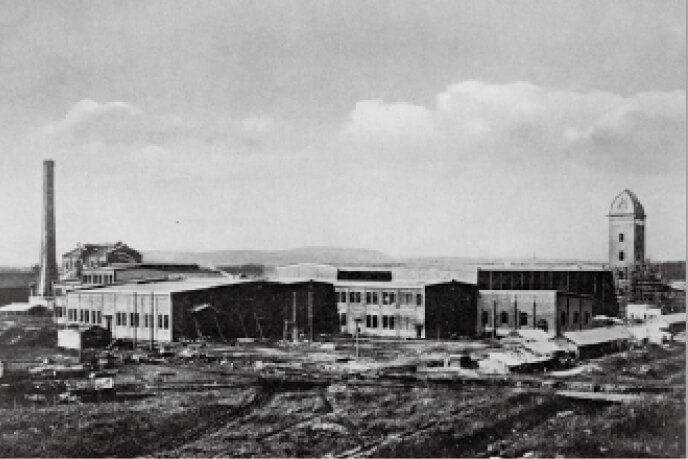
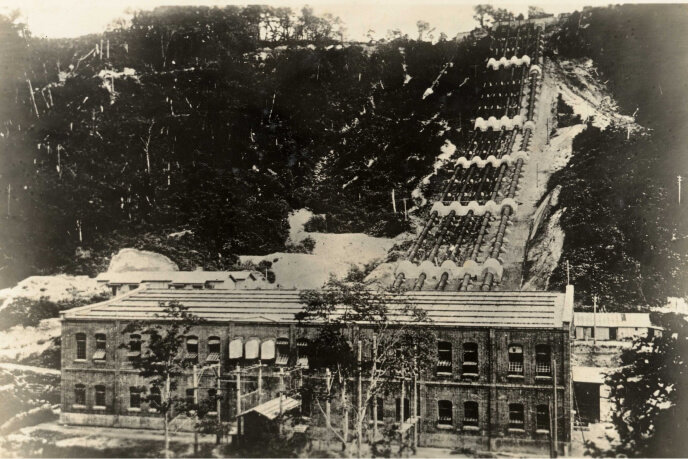
- 1910 Tomakomai Mill opened (self-sufficient domestic newsprint system is established)
- 1915 Expansion into Sakhalin
- 1933 Oji Paper merges with Fuji Paper and Karafuto Industries (tripartite merger) to become Great Oji
- 1937 Oji Forestry established (shift to a recycling- and reuse-based business through the enhancement and cultivation of company-owned forests)
Period of Development
1946 - 1972Efforts toward New Technologies
Amid Japan’s postwar reconstruction, with a view to producing high-quality paper quickly and in large quantities, we turned to a continuous digester, which was unproven at that time but highly productive. We introduced the equipment at the Kasugai Mill. We also developed technology for removing ink from old newspaper, opening up major paths for the use of recovered paper.
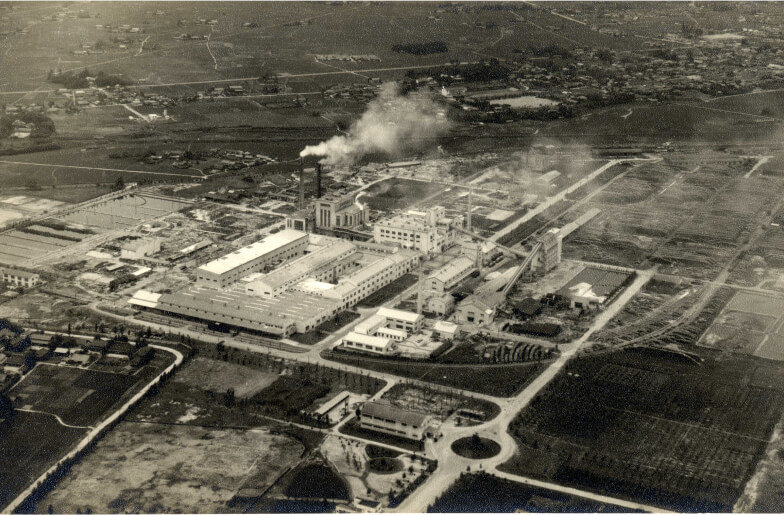
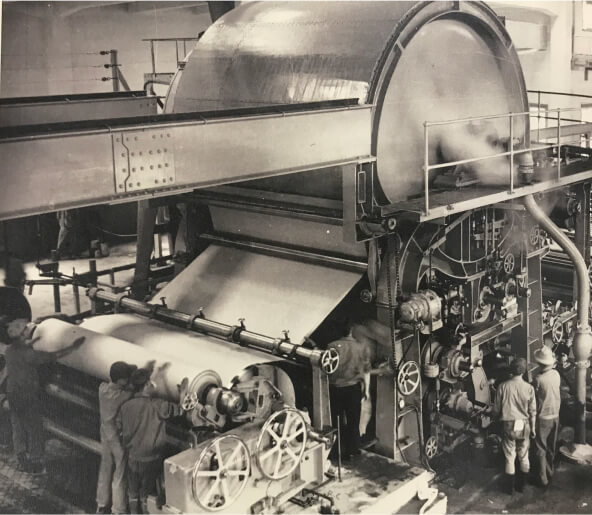
- 1948 Kanzaki Paper Manufacturing established (Kanzaki Mill is spun off as an independent company)
- 1949 Great Oji splits into Tomakomai Paper (the Company), Honshu Paper, and Jujo Paper (three-company split) under the GHQ's Zaibatsu dissolution order
-
1952
Name of the company changed to Oji Paper Industries
Kasugai Mill opened (for the production of woodfree paper) - 1953 Successful production of hardwood pulp achieved using Japan's first continuous evaporation facility
- 1958 Production of DIP (deinked pulp) made from recovered newsprint started (formerly Honshu Paper)
-
1959
Kushiro Mill opened (former Honshu Paper) (production of containerboard started)
Tomioka Mill opened (formerly Kanzaki Paper Manufacturing) (produced coated paper) - 1960 Company name changed to Oji Paper
- 1962 Production of kraft paper started (Kasugai Mill)
-
1970
Merged with Kita Nihon Paper (Ebetsu Mill:fine paper)
Production of pulp nonwoven fabrics started (formerly Honshu Paper) - 1971 Production of Nepia paper for household use begins
Period of Great Change
1973 - 1999Paper Diversification and Response to Environment
The growing abundance of people’s lives brought major changes in their lifestyles. Expectations of paper grew, and we developed new products, such as boxboard, thermal paper, and household paper, one after the other. We also began expanding globally in search of raw materials for paper manufacturing and new markets. On the other hand, we also placed efforts into countermeasures against pollution at our paper mills.
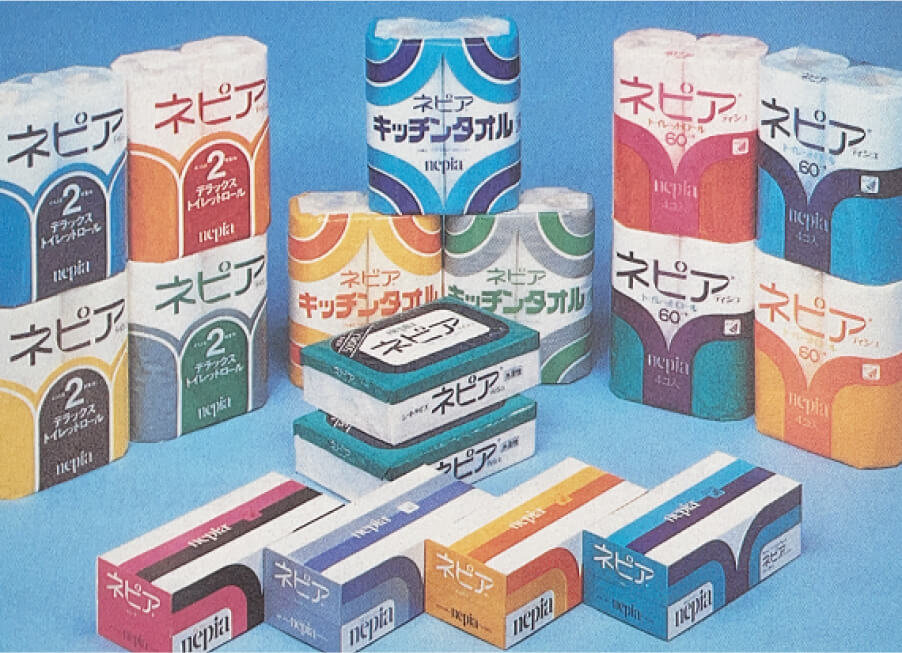
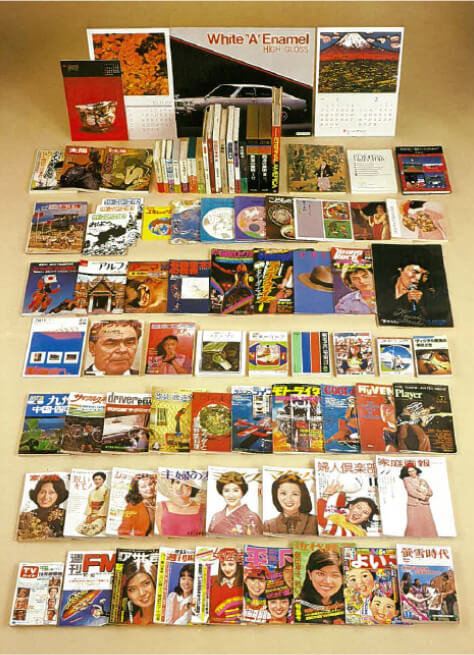
-
1971
Carter, Oji, National Policy, and Pan Pacific (now Pan Pac Forest Products) established(New Zealand)
JANT PTY LTD. established (Papua New Guinea) (former Honshu Paper)(*Withdrawn from business in 2004)
Overseas forest plantation business started -
1973
Pulp mill constructed in Brazil (Japan Brazil Paper and Pulp Resources Development Co., Ltd. (JBP) and Celulose Nipo-Brasileira (CENIBRA) established)
Overseas pulp production begins - 1974 Production of high-grade white paperboard begins (former Japan pulp and Paper Industries)
- 1975 Production of thermal paper begins (former Kanzaki Paper Manufacturing)
- 1979 Merged with Nippon Pulp Industries
- 1986 Kanzaki Specialty Papers (KSP) (USA) established
- 1987 Production of Doremi, disposable diapers started
- 1988 Howe Sound Pulp and Paper (HSPP) (Canada) established(*Sold in 2008)
- 1989 Merged with Toyo Pulp
- 1990 Kanzan Spezialpapiere (KANZAN) (Germany) established (formerly Kanzaki Paper Manufacturing)
- 1991 Pan Pac Forest Products became the Oji group company (New Zealand)
-
1993
Merged with Kanzaki Paper Manufacturing and changed company name to New Oji Paper
Albany Plantation Forest Company of Australia (APFL) established (Australia)
Afforestation business in Australia started -
1994
Quy Nhon Plantation Forest Company of Vietnam (QPFL) established (Vietnam)
Afforestation business in Southeast Asia started -
1996
Merged with Honshu Paper and changed company name to Oji Paper
Launched sales of "nepia tissue compact"
Advance Oji Speciality Papers (AOSP) established (Thailand) (later renamed Oji Paper (Thailand) OPT) - 1999 Ojitex (Vietnam) Co., Ltd. established
Period of Reform
2000 -Shift in the Business Structure and Further Global Deployment
Paper production volume has exhibited a downward trend since 2008. Amid the contraction of the domestic market, we are pressing ahead strongly with our overseas expansion, focusing on Southeast Asia. Buoyed by these endeavors, our overseas sales ratio reached 40.8% (FY2024). In 2012, the company shifted to a holding company structure and changed its name to Oji Holdings Co., Ltd.
In recent years, issues of a global scale, including global warming countermeasures and marine plastics, have emerged, and “transition away from fossil materials” and “sustainability” have become key themes. Under these circumstances, expectations for paper products and wood resources are higher than ever.
In addition, we will enhance the functions of forests that comprise the core of our business, take full advantage of our paper manufacturing technologies cultivated over our long history, and focus on the development of new materials derived from wood to foster wood bio-businesses that will become next-generation core businesses.


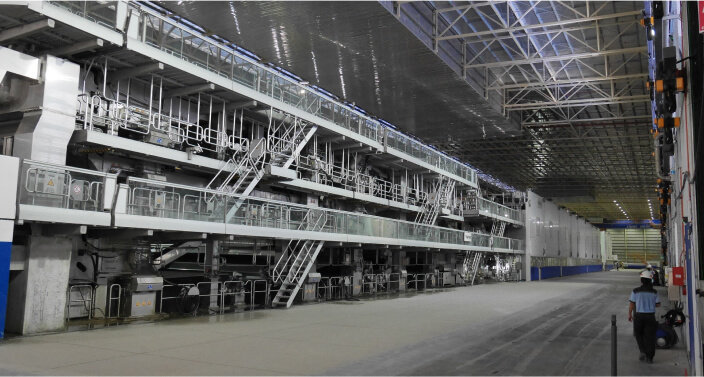
- 2000 Enzymatic bleaching facility begins to operate as the first of its kind in the world at a pulp and paper mill (Yonago Plant)
- 2002 Oji Paper's paperboard manufacturing division and three other companies (Takasaki Sanko, Chuo Paperboard, and Hokuyo Paper) merge to form Oji Paper Board (now Oji Materia), centralizing the production and sale of paperboard
-
2004
Oji Specialty Paper (now Oji F-Tex) established through the integration of Fuji Paper (a subsidiary manufacturing and selling specialty paper and boxboard) into Oji Paper's specialty paper and film division
Waste boiler introduced (Oji Paper Tomakomai Mill)
Sales of Hana-Celeb started (Oji Nepia) -
2005
Oji Container and Chiyoda Container merge to form Oji Chiyoda Container (now Oji Container)
Morishigyo Group (corrugated container business) becomes a group company - 2009 New Tac Kasei Co.,Ltd established
-
2010
PT Korintiga Hutani (KTH) became the Oji group company (Indonesia)
GSPP Holdings became the Oji group company (Malaysia)
Jiangsu Oji Paper Nantong Mill began operations -
2011
Oji Papeis Especiais became the Oji group company (Brazil)
Harta Packaging Group became the Oji group company (Malaysia and Cambodia) -
2012
Established Oji Holdings Corporation (transition to a holding company structure)
Oji JK Packaging (now Oji India Packaging) established (India) - 2013 Succeeded in making the world's first transparent continuous sheet of cellulose nanofibers
-
2014
Carter Holt Harvay Pulp & Paper (now Oji Fibre Solutions) became the Oji group company (New Zealand and Australia)
Oji GS Packaging (Yangon) established (Myanmar)
Production of dissolving pulp started (Yonago Mill)
Operation of kraft pulp facility started at Nantong Mill -
2015
Capital and business alliance with Chuetsu Pulp & Paper Co., Ltd.
People & Grit became the Oji group company (Malaysia)
Oji Green Energy Co., Ltd. established, enters biomass power generation business.
Started biomass boiler power generation business in Nichinan City. - 2017 Launched transparent cellulose nanofibers slurry "AUROVISCO"
-
2019
Capital and business alliance with Mitsubishi Paper Mills Limited
Launched OJI FLEX PACK'AGE, an automatic packaging system and RAKUDAN, continuous corrugated board sheets (Oji Container) -
2020
Formulated our Environmental Vision 2050 and Environmental Action Program 2030
Oji Pharma established
Development of wood-derived pharmaceuticals
Launched Silvio Barrier (Oji F Tex) -
2022
The Purpose is formulated
Adampak Pte. Ltd. becomes a group company (Singapore, etc.) - 2023 IPI S.r.l. becomes a group company (Italy)
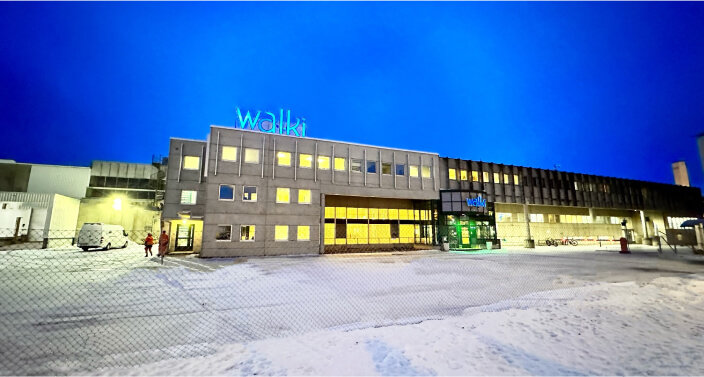
- 2024 Walki Group Oy becomes a group company (Europe)