- Policy
- Targets and Achievements
- Overview of the Oji Group’s Forests (Oji Forests)
- Sustainable Forest Management Initiatives
- Utilization of Forest Certification Systems
- Related pages
Policy
The appropriate cultivation and management of forests not only generate renewable forest resources but also enhance the multiple functions of forests, including CO2 absorption and sequestration, biodiversity conservation, watershed protection and soil conservation.
While the world is rapidly moving toward the realization of a carbon neutral society by 2050, our roles and responsibilities are broader than this. By sustainably managing forests directly connected to our business, we will continue to take steps toward realizing a decarbonized society, enhancing the value of forest resources, and expanding Oji forests further.
Oji Group Sustainable Forest Management Policy
Established: April 1, 2022
The Oji Group owns and manages vast forests and practices sustainable forest management in harmony with the environment and local communities based on our management philosophy, Harmony with Nature and Society.
Our business activities and local communities rely on ecosystem services such as water, climate control and forest products, while our forestry activities impact ecosystems, natural landscapes, and biodiversity. Therefore, we understand our responsibility of managing the forests we own and manage in an environmentally, socially, and economically sustainable way.
Complying with the relevant local, national and regional laws and all relevant international conventions and agreements regarding forest management and based on the applicable internationally recognized principles, we will:
- ensure no deforestation and no illegal logging.
- safeguard ecological health and functionality and promote sustainable forest and land management practices that aid the conservation of biodiversity, soil, and water resources.
- respect the human rights of all people, not discriminate or act with prejudice, and never engage in the utilization of child labor or forced labor.
- respect the unique economic and cultural rights and the legitimate rights of indigenous peoples, including traditional lands and land use.
- contribute to maintaining or enhancing local communities' social and economic well-being.
- monitor the condition of forests and the results of management activities, and verify sustainable forest management using tools such as forest certifications.
- * We procure raw materials following the Oji Group Sustainability Action Guidelines for Supply Chains and the Wood Raw Materials Procurement Guidelines as established separately.
Oji Group Sustainability Action Guidelines for Supply Chains
Targets and Achievements
Increasing greenhouse gas absorption by investing in forestry preservation and forest plantations
In Environmental Action Program 2040, we set a target of offsetting 50% of Scope 1 and 2 GHG emissions in fiscal 2018 through forest absorption and sequestration by fiscal 2040. As an initiative to achieve this goal, we are expanding our plantations in Japan and overseas. By sustainably managing the acquired forest plantations, we will accelerate the growth of forests and increase net CO2 absorption, thus contributing to decarbonization.
Improving the forest certification acquisition rate
Across 635,000 hectares of Oji Forests, we actively utilize forest certification systems to ensure appropriate forest management, including conservation forests, while considering the environment, society and the economy. The Oji Group aims to achieve a 100% forest certification acquisition rate by 2030.
Data
Overview of the Oji Group’s Forests (Oji Forests)
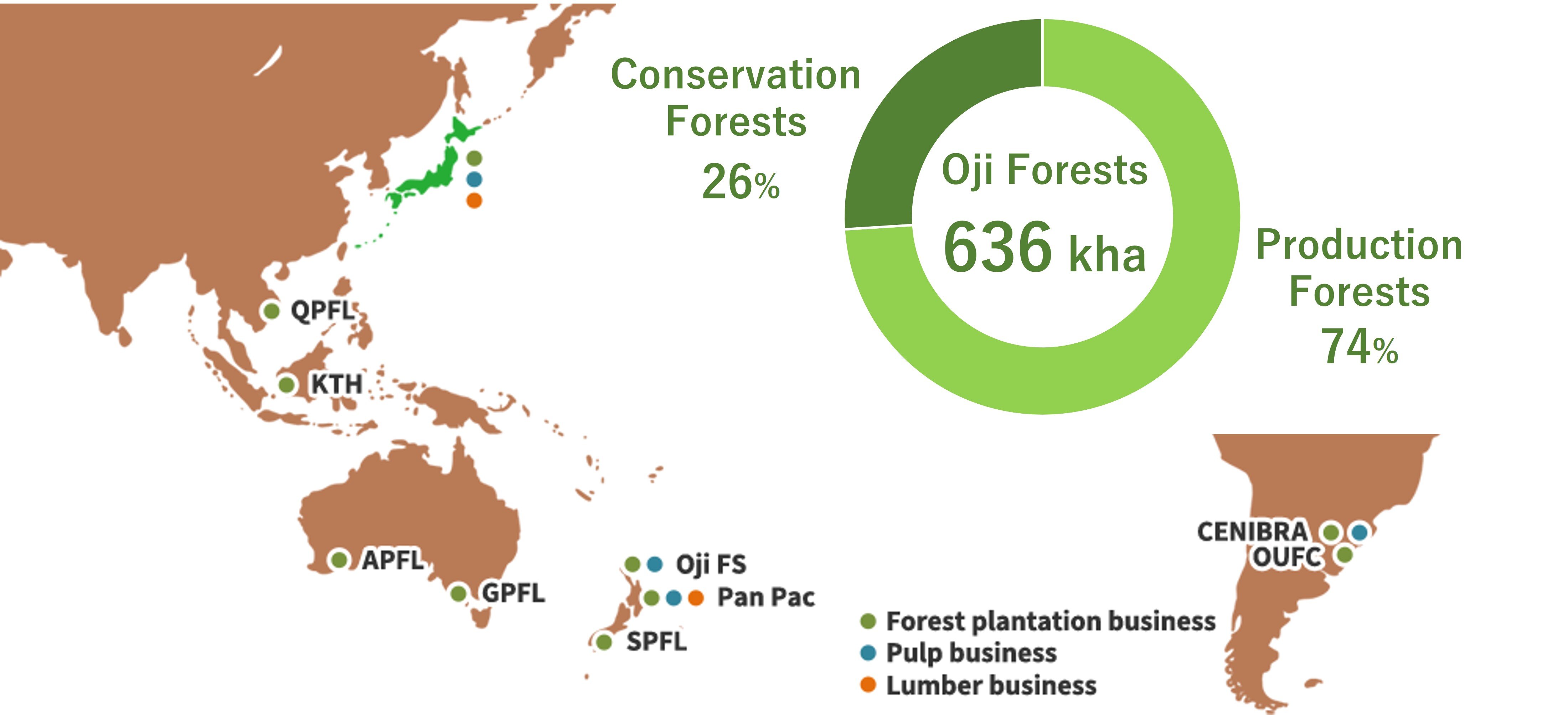
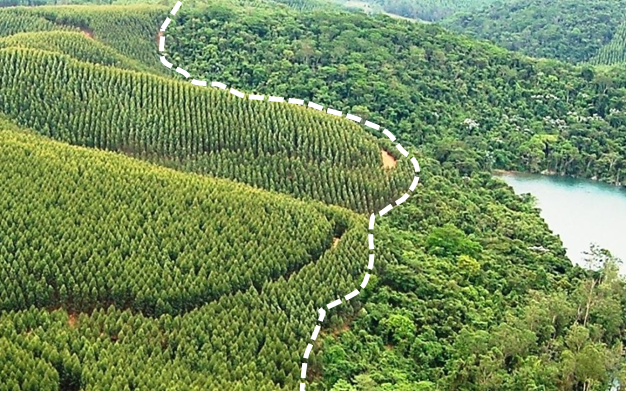
The Oji Group owns and manages extensive forests in Japan and overseas that cover a total of 635,000 ha. Oji’s forest portfolio includes 472,000 ha of production forests, primarily for producing forest products that consider the environment, and about 163,000 ha of conservation forests, which principally function as public utilities, including their value in the conservation of biodiversity and the protection of watersheds. Wood from production forests is used as raw material for paper manufacturing, lumber and plywood, and biomass power generation fuel. In addition, there are growing expectations for its use in the development of new materials derived from wood components.
To ensure a stable supply of wood resources while preserving the public functions of forests, the Oji Group invests approximately ¥18.4 billion annually in sustainable forest management.
Production Forests
The Oji Group is engaged in the forest plantation business around the world. We develop and select tree species that are suitable for the local climate and land conditions and improve cultivation methods by formulating optimal plans for each region. Through these measures, we enhance forest productivity, produce high-quality timber and improve profitability through the stable supply of forest products.
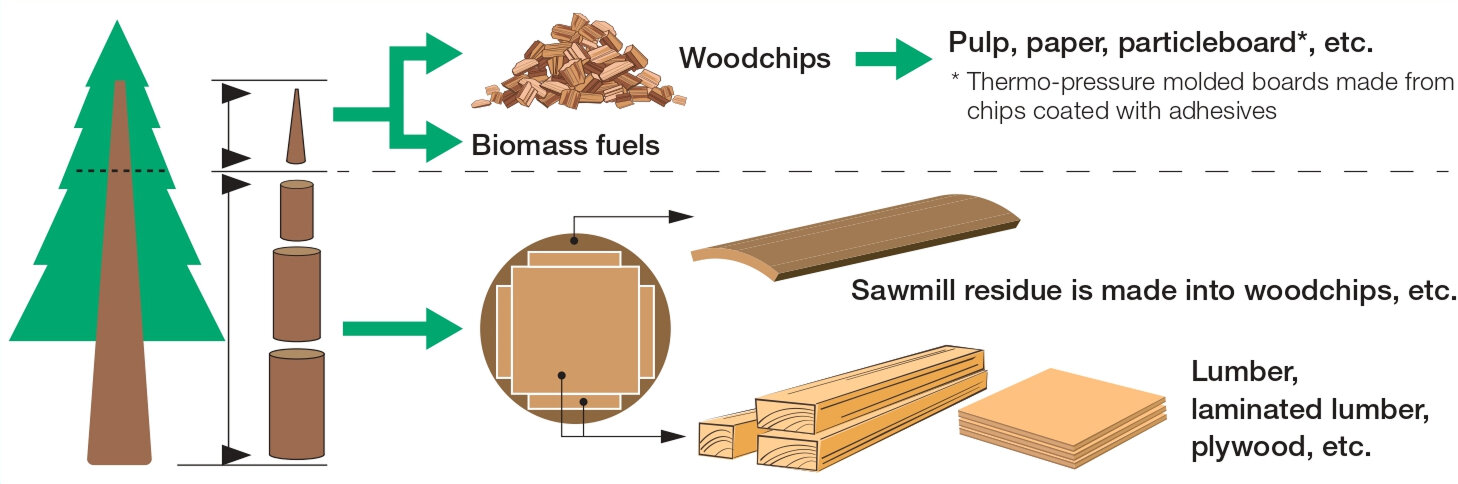
Through a cycle of planting, cultivating, harvesting and replanting, forests are constantly growing and can be used to create a variety of products, including lumber, on a continuous basis. Moreover, we maintain economic efficiency while facilitating the thorough and cascading use of harvested wood for a variety of applications, including lumber, plywood, woodchips for manufacturing paper and wood biomass fuel.
Maintaining forests as production forests serves multiple purposes beyond just timber use. It offers various ecosystem benefits (ecosystem services), such as providing opportunities for residents to harvest and use forest products, and serving as migration routes for wildlife. Through these efforts, the Oji Group, as a comprehensive forestry business group, promotes the sustainable use of lumber.
Conservation Forests
The Oji Group emphasizes the environmental value of forests and is actively engaged in the development and management of environmental conservation forests. These forests play a vital role in protecting local ecosystems by contributing to biodiversity conservation, watershed protection, soil conservation, and carbon sequestration.
Under our long-term vision for 2050, Environmental Vision 2050, we aim to achieve both net-zero carbon and harmonious coexistence with nature. Environmental conservation forests are a key initiative toward realizing these goals.
Through appropriate management in collaboration with local communities, we enhance the value of these forests as natural capital, thereby contributing to the sustainable growth of our business.
List of forest plantation companies
Sustainable Forest Management Initiatives
Oji Forests in Japan
In Japan, the Oji Group owns and manages approximately 650 company-owned and shared forests across the country, from Hokkaido to Kyushu, covering a total area of around 188,000 hectares. Of this, about 40% (76,000 hectares) consists of planted forests, including species such as Sakhalin fir and Japanese larch in Hokkaido, and Japanese cedar and cypress in regions across Japan south of Hokkaido.
With an average tree age of approximately 60 years, many of these forests are entering the harvesting phase. We are working to rejuvenate the forests through clear-cutting and replanting, while continuing thinning and other silvicultural practices to promote sustainable forest management. In addition, around 11,000 hectares have been designated as environmental conservation forests, which contribute to society by preserving the multifaceted value of forests.
In recent years, these forests have also been positioned as key fields where the Oji Group conserves natural capital and quantify its value. They are actively used as demonstration sites for visualizing the value of forests.
Basic Policies for Company-Owned Forest
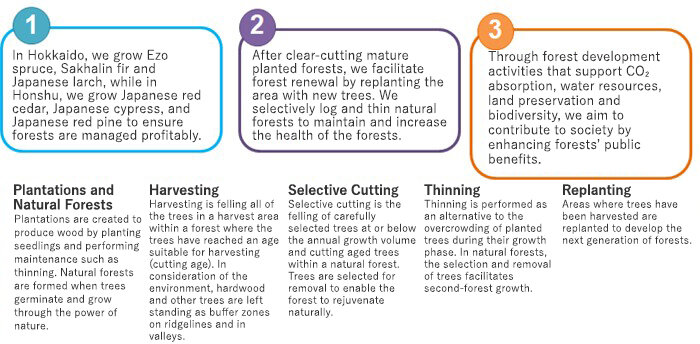
In our company-owned forests in Japan, it takes around 60 years for trees to grow from seedlings to the point of final harvesting. During this time, we carry out various forest management tasks, such as planting seedlings, clearing undergrowth, thinning, and vine cutting.
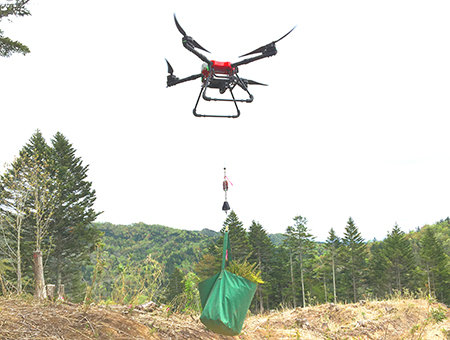
Each year, we harvest and replant about 500 hectares, with most of the work done manually. Just the planting and undergrowth clearing alone requires a total of around 13,000 workers annually. To reduce the strain on our workforce, we’re introducing drones to transport seedlings and testing new methods, like transitioning from bare-root to container-grown seedlings, and planting elite varieties of trees. These trees grow faster and are expected to reduce the frequency of undergrowth clearing that is needed.
Planting Elite Trees
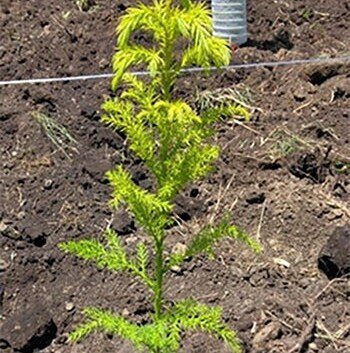
Elite trees are a special category of superior trees, bred by cross-pollinating the very best specimens from Japan’s forests. These second-generation (or later) elite trees are carefully selected from saplings descended from first-generation superior trees. Elite trees have several remarkable characteristics:
- Rapid early growth
- Pollen production reduced to less than half of conventional levels
- Straight, uniform trunks
Thanks to their fast growth, these trees offer significant advantages, such as lowering maintenance costs by reducing the need for undergrowth clearing and minimizing the risk of deer damage.
Oji Forests outside Japan
In the overseas forest plantation business, the Oji Group plants fast-growing trees including eucalyptus and acacia, which are hardwood trees, and radiata pine, which is a softwood tree. Plantation trees which have become harvestable are converted into raw materials for paper (woodchip), sawtimber, or pulp on site and then sold externally or used as raw materials for paper from the Oji Group.
Our overseas forest plantation business not only secures wood raw materials but also absorbs and stores CO2 and creates employment and industries, thus contributing to building truly prosperous and sustainable local communities.
CENIBRA's initiative for forest fires
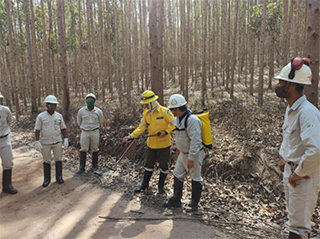
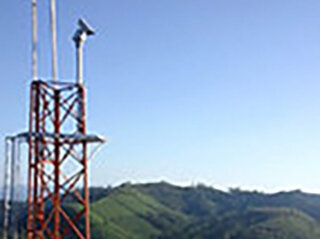
Massive forest fires have become common occurrences in many parts of the world, a critical global issue that needs urgent global solutions. CENIBRA, which has forest plantations and a pulp mill in Brazil, has introduced an innovative forest fire prevention and fighting system using artificial intelligence (AI) for their 250,000 ha forests. The company has 39 watchtowers equipped with 360 degrees rotating cameras. When the AI detects smoke and fires, the monitoring room notifies fire crews nearest to the site of the incidents. They start firefighting immediately. The AI-equipped cameras are more efficient than human eyes and can locate the accurate fire site within 1-2 minutes. CENIBRA has reduced forest fire risks significantly.

Accelerating CO2 Absorption through Fast-Growing Tree Plantations
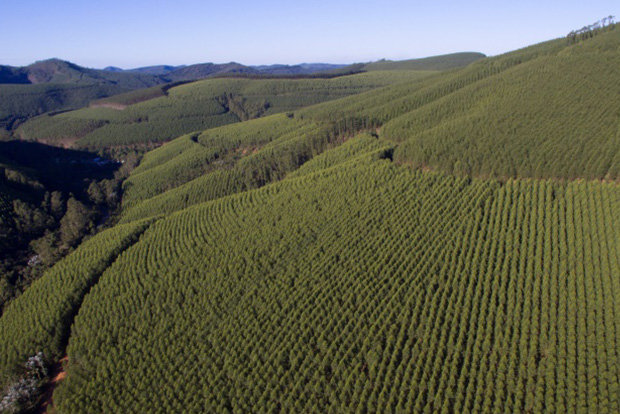
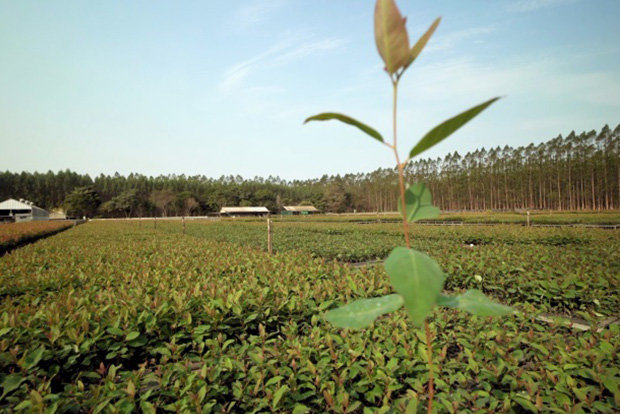
A feature of fast-growing trees such as eucalyptus and acacia, which are hardwood trees, or radiata pine, which is a softwood tree, is their fast initial growth. It is generally believed that plantations in their initial growth phase have a higher CO2 absorption capacity than mature natural forests. In addition, the felling of trees at an optimal timing for the tree species or for the purpose of use enables efficient timber production and maintains plantations in a state where they have a high CO2 absorption capacity. Further, by planting superior varieties of trees that have been developed in each business, the Oji Group aims to increase the forest growth rate and facilitate CO2 absorption.
Enhancing the quality of trees and forest management for greater forest productivity
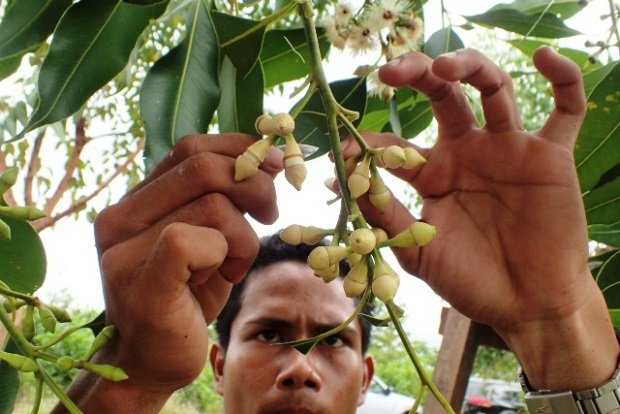
The Asia Agriculture and Forestry Technology Center (AFTEC) conducts research and technology development optimized for each area based on forest plantation projects in Southeast Asia to maintain and improve the productivity of plantation trees. The planting of fast-growing, high-quality tree varieties and the improvement of the quality of plantation trees and yields leads to not only the improvement of the profitability of the forest plantation business but also the protection of natural forests through a reduction of illegal logging in these forests. AFTEC focuses on improving its fast-growing tree varieties, including eucalyptus and acacia tree species, using breeding techniques developed in various countries. Fast-growing trees absorb significant nutrients. CENIBRA in Brazil has also dedicated many years to improving tree varieties through breeding. The CENIBRA team patiently cross-pollinated trees and selected about 15 superior varieties from over 20,000 candidates. These varieties were chosen for their exceptional growth rates and high pulp productivity.
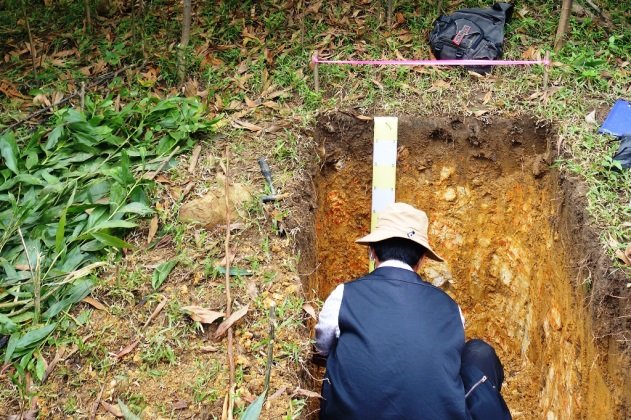
In addition, there are concerns that using heavy machinery when harvesting can compact the soil, potentially affecting future growth. To ensure the sustainable operation of the forest plantation business, it is essential to maintain healthy soil conditions by replenishing the nutrients lost due to harvesting and improving the physical properties of the soil through tilling and other measures. For this purpose, the AFTEC conducts soil and tree nutrition analyses and tests fertilization and tilling methods, in its efforts to safeguard the soil environment.
Satellite Data Analysis of CENIBRA's Forests
In recent years, datasets that show results of analysis of global forest changes using satellite data and platforms that display maps of these results have been developed. This has made it easy for anyone to conduct extensive and long-term forest monitoring. However, these data have the issue of misinterpreting logging operations in sustainable forestry management as deforestation. Therefore, these data should be used with caution.
Oji Holdings commissioned a third party proficient in satellite analysis to analyze forest changes by combining satellite data, local natural vegetation information, and operational history for CENIBRA's company-owned forests, the largest in the Oji Group. The results show that it is highly likely that 99.9% of the CENIBRA-owned forests labeled as 'Forest Cover Loss' in open dataset do not correspond to deforestation.
The Oji Group will continue to promote sustainable forest management and utilize various analytical technologies to engage in natural monitoring and information disclosure.
Utilization of Forest Certification Systems
Forest certification is a system in which an independent third-party organization audits and certifies that forests are appropriately managed in accordance with established standards, based on environmental, social, and economic perspectives. It is an important mechanism for balancing sustainable resource use with environmental conservation.
The Oji Group utilizes forest certification systems that support sustainable forest management and manufactures products certified by FSC (FSCTM*1C014119, etc.) and PEFC*2 (JIA-PEFC-COC-0808, etc.).
These products use wood raw materials that comply with the requirements of each certification system. We have obtained FM certification*3 for our own forests and CoC certification*4 for our production, processing, and distribution operations within the Group. By acquiring certification throughout the entire supply chain—from forests to processing mills and distribution—we supply a wide range of forest-certified products, from intermediate to finished products such as copy paper and household paper.
In addition, the Oji Group has established the Forest Certification System Implementation Committee to ensure the proper operation and effective use of forest certification systems.
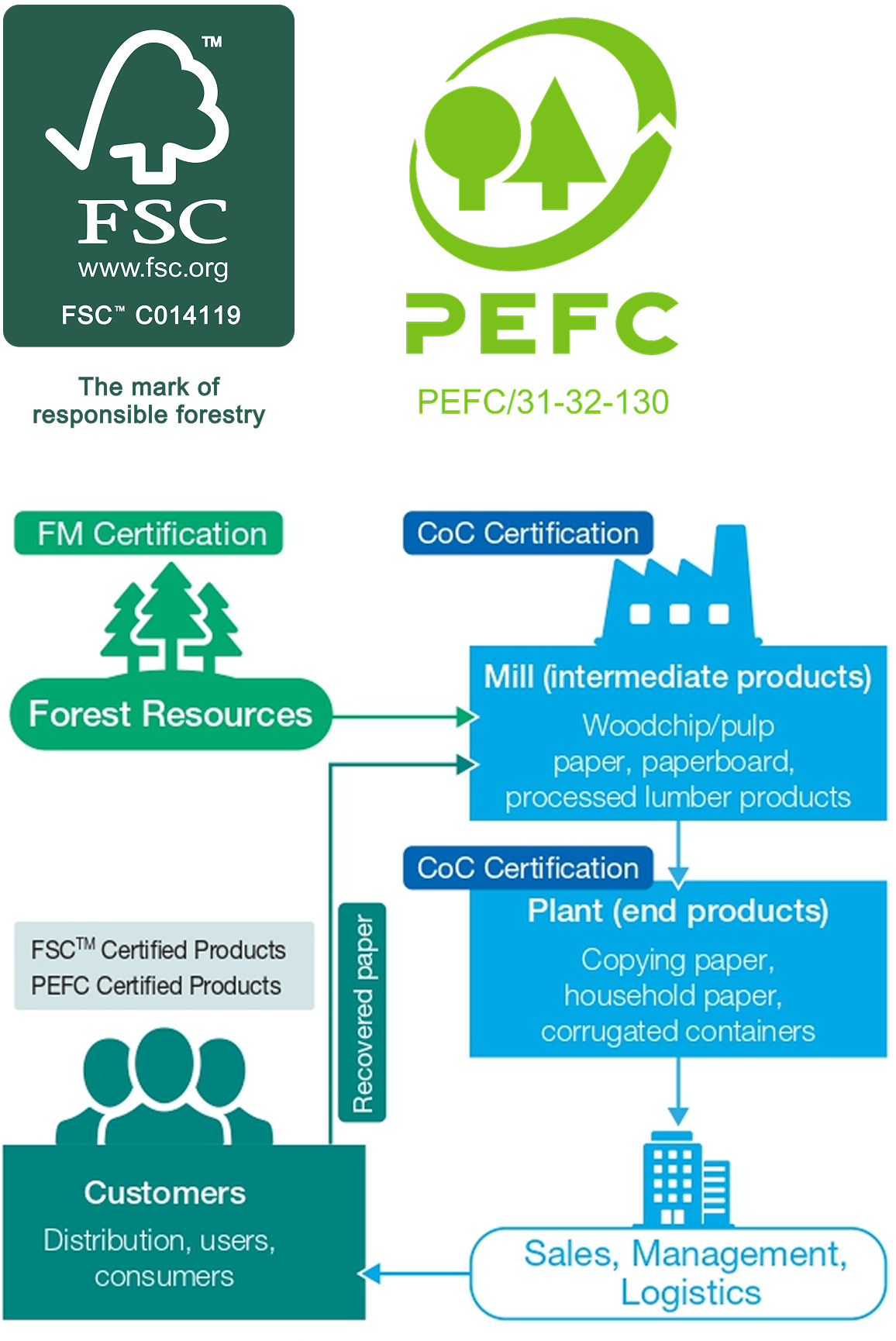
- *1 FSC:Forest Stewardship CouncilTM
- *2 PEFC:Programme for the Endorsement of Forest Certification
- *3 FM certification:Confirmation of forest management
- *4 CoC(Chain of Custody)certification:Confirmation of management on processing and distribution of produced wood
Acquisition of Forest Management Certification
To enhance the credibility of sustainable forest management, the Oji Group actively pursues Forest Management (FM) certification both in Japan and overseas as a key mechanism for ensuring the legality and sustainability of its plantation operations.
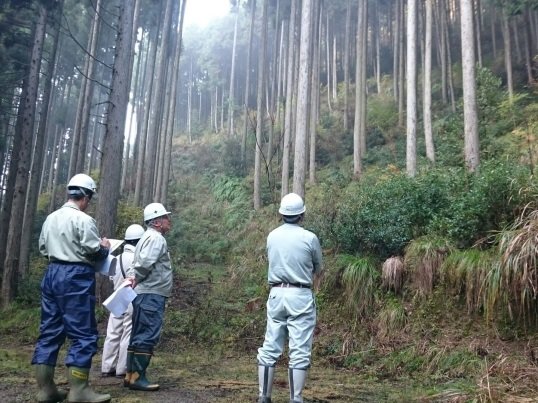
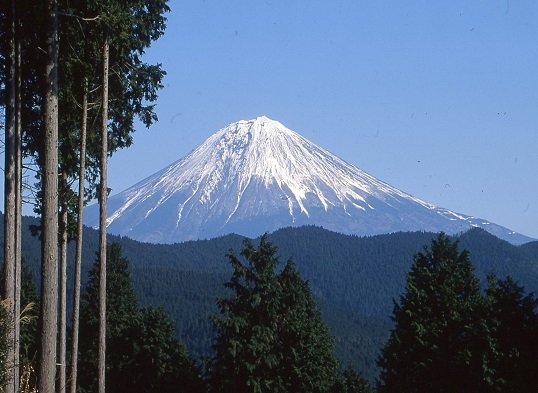
In Japan, we have acquired SGEC forest certification, a Japan-specific forest certification program operated by the Sustainable Green Ecosystem Council. Certification began in 2003 with the Kami-Inako mountain forests in Shizuoka Prefecture. As of today, 100% of our company-owned forests in Japan are certified, representing the largest certified forest area held by a private company in the country. In FY2016, SGEC entered into a mutual recognition agreement with PEFC, an international forest certification system, making SGEC certification internationally recognized.
We are also progressing with certification acquisition overseas, achieving a certification rate of 96% as of the end of FY2024. Through these initiatives, the Oji Group continues to practice responsible forest management.
Utilization of Certification in Wood Raw Material Procurement
In accordance with its Wood Raw Material Procurement Guidelines, the Oji Group requires all suppliers to produce sustainable wood raw materials and verifies their compliance.
To conduct this verification, we utilize the FSC forest certification system. All procured wood raw materials comply with FSC requirements, including FSC-certified wood and FSC-controlled wood*5.
Suppliers holding FSC-CoC certification undergo third-party audits, and by leveraging such certification systems, we ensure traceability and appropriate management of wood raw materials throughout all stages of the supply chain.
- *5 FSC controlled wood mitigates the risk of forest products originating from unacceptable sources:
1. Illegally harvested wood
2. Wood harvested in violation of traditional and human rights
3. Wood from forests in which high conservation values are threatened by management activities
4. Wood from forests converted to plantations or non-forest use
5. Wood from forests in which genetically modified trees are planted
For more information about FSC controlled wood see the FSC website.