- Policy
- Oji Group Sustainability Action Guidelines for Supply Chains
- Wood Raw Material Procurement Guidelines
- Structure
- Grievance Mechanism
- Engagement with Suppliers
- Supplier Sustainability Surveys
- Supplier Human Rights and Environmental Due Diligence
- Responsible Procurement based on Wood Raw Material Procurement Guidelines
- Supplier Monitoring
- Compliance with the Clean Wood Act
- We Are Committed to Fostering Sustainable Supply Chains Through Active Participation in Key Initiatives.
- Data
Policy
The Oji Group's business activities could give rise to both positive and negative impacts on the environment and society across the supply chain. In raw material procurement in particular, the Oji Group is expected to prevent and mitigate negative impacts such as human rights abuses, deforestation and conversion, and loss of biodiversity. While these could lead to risks including loss of stakeholder trust, difficulties in procurement, and cost increases, sustainable raw material procurement offers opportunities to strengthen trust-based relationships with suppliers and to increase sales.
To prevent and mitigate these negative impacts and reduce related risks, the Oji Group has established the Oji Group Sustainability Action Guidelines for Supply Chains and the Wood Raw Materials Procurement Guidelines. Both Guidelines are shared across all procurement departments. The Oji Group requests new suppliers to understand the Guidelines prior to entering into business, and upon revision of the Guidelines, communicates the updated content to all suppliers. Through continuous dialogue with suppliers, the Oji Group advances responsible raw material procurement.
Oji Group Sustainability Action Guidelines for Supply Chains
The Oji Group Sustainability Action Guidelines for Supply Chains sets out requests to suppliers in four areas—(1) compliance with laws, regulations, and social norms, fair trade, and anti-corruption measures; (2) consideration for the environment; (3) respect for human rights and labor practices; and (4) communication with society—in order to prevent and mitigate negative impacts and reduce risks through collaboration with suppliers.
These Guidelines are positioned as the document that implements, in the supply chain, the Oji Group's overarching policies on human rights and anti-corruption—namely the Oji Group Human Rights Policy and the Oji Group Anti-Corruption Declaration. These Guidelines operationalize the intent of both policies in supply chain practice and translate them into concrete requests to suppliers.
Through surveys and dialogue with suppliers, the Oji Group monitors compliance with these Guidelines. Where significant violations are identified, the Oji Group requests corrective action from the suppliers concerned. Where improvements are not confirmed, the Oji Group will review the business relationship, including the suspension of procurement.
Revised: July 16, 2026
Oji Group Sustainability Action Guidelines for Supply Chains
Oji Holdings Corporation
Basic Approach
The Oji Group has established Sustainability Action Guidelines for its supply chains. It communicates these guidelines to its suppliers and requests their understanding and compliance. These Guidelines are aligned with the United Nations Guiding Principles on Business and Human Rights (UNGPs), the OECD Guidelines for Multinational Enterprises on Responsible Business Conduct, and the ILO Declaration on Fundamental Principles and Rights at Work, among others, and have been established for the purpose of advancing responsible business conduct across the supply chain.
These Guidelines implement the principles of the Oji Group Human Rights Policy and the Oji Group Anti-Corruption Declaration in supply chain practice, and translate them into specific requirements for our suppliers.
The Oji Group regards compliance with these Guidelines as part of the terms of business with its suppliers and monitors compliance accordingly. Where significant violations of these Guidelines are identified, the Oji Group will engage in dialogue with the suppliers concerned and request corrective action. Where improvements are not confirmed, the Oji Group will review the business relationship, including the suspension of procurement.
Requests to Suppliers
The Oji Group requests its suppliers to fulfill each of the requests below. The Group will collaborate with them to fulfill the requests.
The Group expects suppliers to collaborate with their own suppliers to fulfill the requests.
(1) Compliance with laws, regulations, and social norms, fair trade, and anti-corruption measures
Comply with applicable laws, regulations, and social norms in the countries and regions where business activities are conducted.
- Comply with relevant laws and regulations and international treaties.
- Thoroughly ensure fair trade practices and institute anti-corruption measures (including the prohibition of bribery, corruption, and other fraudulent practices).
- Avoid conflicts of interest in which the private interests of oneself or third parties influence, or may influence, business decisions.
- Ensure that all products and services meet the required standards of quality.
(2) Consideration for the environment
Conduct business with due consideration for the impact of business activities on local communities, biodiversity, natural capital, climate change, resource circulation, environmental pollution, and other environmental issues.
- Establish and strengthen the environmental management system.
- Preserve biodiversity.
- Procure raw materials free from deforestation and conversion (cut-off date: 31 December 2020).
- Conserve High Conservation Value (HCV) areas, High Carbon Stock (HCS) forests, and peatlands.
- Conserve water resources.
- Address climate change.
- Reduce the amount of waste and use resources effectively.
- Reduce environmental impact.
- Manage chemical substances.
(3) Respect for Human Rights and Labor Practices
Respect the human rights of employees and ensure a safe and comfortable working environment.
- Respect human rights. Prohibit discrimination, harassment in any form, and inhumane treatment, including corporal punishment and abuse.
- Prevent employees from being involved in forced labor or child labor. Prohibit the employment of children under the minimum employment age.
- Prohibit discrimination in employment based on gender, race, religion, or any other social attributes.
- Ensure that wages are above the legal minimum wage.
- Respect employees’ right to organize and bargain collectively.
- Make sure to follow the legal regulations on the maximum number of work hours and avoid excessive work hours.
- Make sure to provide a safe, hygienic, and healthy working environment for employees.
- Uphold and advance safety and health in the entire supply chain.
(4) Communication with society
Engage in communication with local communities in connection with business operations.
- Engage with stakeholders to build trust.
- Contribute to local communities and society.
- Respect cultures and customs in regions where business activities are conducted, and recognize and respect the rights of Indigenous Peoples and local communities (IPLC). (Where business activities may affect the rights of Indigenous Peoples and local communities, respect free, prior, and informed consent (FPIC).)
- Protect and disclose information appropriately.
- * These action guidelines apply to all raw materials that the Oji Group procures. The Group has established Wood Raw Materials Procurement Guidelines separately.
- *The "cut-off date: 31 December 2020" means that the Oji Group does not procure raw materials produced on land where deforestation or conversion has occurred after this date.
- * To effectively advance sustainable procurement that considers the environment and society, the Oji Group will conduct periodic monitoring of suppliers' compliance with these Guidelines and their environmental and social performance.
- * Where there are concerns regarding potential violations of laws or regulations, bribery or corruption, or conflicts of interest in connection with transactions with the Oji Group, suppliers are required to appropriately disclose and address such situations.
- * The Oji Group will annually disclose the monitoring results and yearly progress under these Guidelines through the Integrated Report, Sustainability Report, ESG Data, and other related publications.
- *The Oji Group has joined a non-judicial grievance mechanism platform that complies with the United Nations “Guiding Principles on Business and Human Rights (UNGPs)." This platform is available to all stakeholders, including employees, the supply chain, local residents, and Indigenous Peoples. It provides a remedy mechanism for addressing negative impacts on human rights and the environment throughout the entire value chain of the Oji Group, both domestically and internationally, and ensures appropriate responses.
Translation of Oji Group Sustainability Action Guidelines for Supply Chains
Wood Raw Material Procurement Guidelines
The wood used for making paper is an excellent resource that can be renewably produced through sustainable forest management. When managed and used appropriately, forest resources can contribute to the prevention of global warming (through the absorption and storage of carbon dioxide), the conservation of water resources and the preservation of biodiversity.
We ensure that there is no deforestation or illegal logging in our management and use of forests. We maintain and enhance our forest-related environmental values, and at the same time we are aware that we must also fulfill our other responsibilities to society, such as our responsibility to respect human rights and protect labor and traditional rights in our forest operations. Understanding this, the Oji Group established its Wood Raw Material Procurement Guidelines, a part of the Oji Group Sustainability Action Guidelines for Supply Chains, to facilitate the responsible sourcing of wood raw materials from all wood chips and pulp suppliers who share our commitment to these guidelines.
Furthermore, amidst society’s growing concerns regarding human rights issues and deforestation, the Oji Group revised its Wood Raw Material Procurement Guidelines in March 2023 to respond to these social issues and it continues to review them as necessary.
We also communicate the content of revised guidelines to suppliers around the world by creating both Japanese and English language versions of the guidelines and disclosing them on our website.
Wood Raw Material Procurement Guidelines (Revised in 2024)
The Oji Group requires and verifies that all suppliers produce sustainable wood raw materials. We will responsibly procure materials by examining wood raw materials from all suppliers to ensure their traceability and purchasing materials only from properly managed forests. If the source or forest management status of the purchased wood is unknown or the wood does not conform to our requirements regarding the following, we will engage in a dialogue with the supplier and request improvements. We will not source from suppliers who do not make improvements.
- Raw materials production area (logging area, forest ownership form, differentiation between plantation wood and natural forests)
- Forest management method (applicable forestry laws, forest management regulations)
- Acquisition status for forest certification
- Avoidance of illegal logging (verification of forest certification, harvest permits, records of round logs received.)
- Avoidance of wood from natural forests being converted to wood from plantations or non-forest land use
- Avoidance of genetically modified (GMO) wood
- Avoidance of logging in High Conservation Value (HCV) Forests
- Avoidance of raw materials associated with major social conflicts
- Ensuring the protection of human rights and labor rights
We will also utilize the FSC™ or PEFC forest certification systems to verify the sustainability of procured raw materials. We will survey imported wood chips on a per-ship basis. Domestic woodchips and pulp, which have smaller purchase volumes, will be surveyed once a year.
Structure
Sustainability Management (Governance) Structure
Policies, commitments, and material response strategies concerning the supply chain are deliberated by the Sustainability Committee—whose agenda includes "supply chain risks," "human rights risks," and "anti-corruption"—and, according to their materiality, submitted to and reported to the Group Management Meeting, with the Board of Directors exercising monitoring and supervision.
The Corporate Sustainability Division collaborates with procurement departments—including Oji Green Resources, which oversees the procurement of key raw materials—to monitor compliance with the Guidelines, conduct Supplier Sustainability Surveys and Supplier Human Rights and Environmental Due Diligence, and carry out corrective action requests and follow-up. The status and results of these activities are reported, according to their materiality, to the Sustainability Committee, the Group Management Meeting, and the Board of Directors, ensuring continuous management and supervision by governance bodies.
| Targets | Conduct sustainability surveys for main suppliers |
|---|---|
| Results | Conducted sustainability surveys of recovered paper, pulp, base paper, woodchips, chemicals, fuels (PKS, RPF, fossil fuels, etc.) and subsidiary materials (film substrates, inks, etc.) |
Grievance Mechanism
Providing fair and equitable remedies
At the Oji Group, we receive reports and requests for consultation via a non-judicial engagement and remedy platform conforming to the United Nations Guiding Principles on Business and Human Rights. This platform is provided by the Japan Center for Engagement and Remedy on Business and Human Rights (JaCER), an organization that supports and facilitates member companies' redress of grievances in a professional capacity.
This platform also receives requests for consultation regarding not only human rights issues but also responsible business conduct as a whole (including conduct and ethics related to the environment and nature). Therefore, we are able to receive anonymous reports from all of our stakeholders in Japan and other countries, including business partners, suppliers, people from local communities, Indigenous people and immigrant workers.
This platform is available in the following 33 languages. We will ensure the anonymity of whistleblowers and the confidentiality of reported information during the reporting process.
【Available Languages】
Japanese, English, Chinese, Korean, Thai, Vietnamese, Portuguese, Spanish, French, German, Italian, Indonesian, Filipino, Malay, Hindi, Dutch, Burmese, Nepali, Polish, Bengali, Khmer, Czech, Arabic, Danish, Hungarian, Russian, Slovak, Turkish, Tamil, Swedish, Mongolian, Swahili, Sinhala
Engagement with Suppliers
To prevent and mitigate negative impacts on the supply chain (such as environmental pollution and human rights abuses) and reduce related risks, the Oji Group operates the following three mutually functioning initiatives on a continuous basis.
| Initiative | Purpose of Survey | Object of Survey | Scope |
|---|---|---|---|
| Supplier Sustainability Survey | Early identification and correction of negative impacts arising from suppliers, through surveys and requests for improvement | ESG performance of suppliers (companies) | Major suppliers determined by transaction value (approximately 1,000 companies) |
| Supplier Human Rights and Environmental Due Diligence | Individual assessment and corrective measures for priority suppliers; dialogue and collaboration with suppliers | Negative impacts on human rights and the environment at suppliers (companies) | Priority suppliers identified through the "Supplier Risk Assessment Process" |
| Traceability Verification of Wood Raw Materials | Verification of the legality and sustainability of raw materials themselves; prevention of problematic raw materials entering the supply chain | Origin and management status of raw materials (wood raw materials) | Wood raw material suppliers |
The two supplier-focused initiatives operate under a division of roles: the Supplier Sustainability Survey conducts broad risk assessment across major suppliers, while the Supplier Human Rights and Environmental Due Diligence carries out individual corrective measures for priority suppliers identified based on the risk assessment. The raw-material-focused initiative (Traceability Verification of Wood Raw Materials) addresses negative impacts arising from raw materials themselves. By advancing both initiatives in parallel, the Oji Group prevents and mitigates negative impacts across the supply chain from multiple perspectives.
Supplier Sustainability Surveys
In accordance with the Environmental Action Program 2030, and to advance legal compliance and environmental- and social-considerate procurement through supplier risk assessment, the Oji Group has conducted surveys of major suppliers since FY2020. From FY2024, the Group has used the assessment platform provided by the third-party organization Asuene Inc., referring to international norms including the United Nations Guiding Principles on Business and Human Rights (hereinafter "UNGPs"), the OECD Guidelines for Multinational Enterprises on Responsible Business Conduct, and the ILO Declaration on Fundamental Principles and Rights at Work.
If any compliance violations are identified through these surveys, we will engage in dialogue with the suppliers and request improvements. If no modifications are made, we will stop procuring from that supplier.
Major suppliers:Suppliers accounting for the top 75% of the Oji Group’s transaction value (approximately 1,000 companies)
Click here for the results for FY2020–2024
Summary of Survey Results (FY2025)
Through FY2024, the Oji Group had received responses from 859 of 1,185 companies surveyed (response rate: 72%). From FY2025, the Group has launched a new survey cycle in which major suppliers are reassessed by procurement category. In FY2025, focusing on suppliers of base paper and starch, 153 out of 180 companies responded.
In accordance with international norms including the UNGPs, the OECD Guidelines for Multinational Enterprises on Responsible Business Conduct, and the ILO Declaration on Fundamental Principles and Rights at Work, as well as the Oji Group Sustainability Action Guidelines for Supply Chains, the Oji Group evaluates the following items from an ESG perspective and assigns ranks according to the score ratio. Non-responding suppliers are rated Rank E.
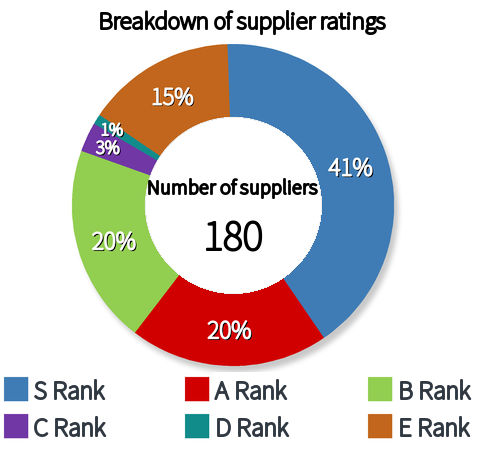
| Score rating | Criteria (Scoring Percentage) | Number of suppliers |
|---|---|---|
| S | 93.75% or more | 74 |
| A | 81.25% or more but less than 93.75% | 36 |
| B | 62.5% or more but less than 81.25% | 36 |
| C | 31.25% or more but less than 62.5% | 6 |
| D | 12.5% or more but less than 31.25% | 1 |
| E | Less than 12.5% or no response | 27 |
| Total score | 180 |
Rating based on the total score of eight items
- Governance
- Human Rights
- Labor
- Occupational Health and Safety
- Environment
- Coexistence with Local Communities
- Supply Chain
- Information Security and Quality
Follow-up and Future Initiatives
The Oji Group conducts follow-up based on the results of the Supplier Sustainability Survey. In FY2025, in response to the FY2024 survey results, the Group carried out additional inquiries with 17 suppliers suspected of possible non-compliance and confirmed that no compliance issues existed.
In addition, as training to enhance suppliers' awareness of sustainability, the Oji Group holds an annual briefing session to provide feedback on survey results and to communicate the importance of environmental and social issues. In FY2025, 60 suppliers participated.
For suppliers that did not respond in the FY2025 survey, the Oji Group will conduct re-surveys in FY2026. From FY2026 onward, the Group will continue conducting surveys of major suppliers by procurement category, work to increase response rates, and continue briefing sessions and follow-up activities to strengthen supply chain management.
Sustainability survey on wood pulp contained in purchased base paper (procured from base paper manufacturers) (FY2022-2024)
In FY2022, the Oji Group conducted a legality survey of wood pulp contained in purchased base paper (procured by base paper manufacturers), which had not previously been subject to survey. Among the 531 brands (excluding customer-designated base paper), the origin of the wood was unclear for five brands. From FY2023, the Group advanced switching these brands, and by May 2024 all brands had been switched to those with verified legality. As a result, the Oji Group suspended transactions with three suppliers. In addition, for one type of purchased base paper under consideration, the legality could not be verified, and the Group decided not to proceed with the new transaction.
| Survey Target | Number of brands | Ratio | Notes | |
|---|---|---|---|---|
| Base paper purchased | 531 | 100% | Excluding customer-specified base paper | |
| Breakdown | Base paper for which the legality of the wood used has been verified | 531 | 100% | Forest certification, etc. acquired |
| Base paper for which the origin of the wood used has not been identified | 0 | - | Switching completed | |
| Others | 39 | - | Customer specified base paper | |
Supplier Human Rights and Environmental Due Diligence
For priority suppliers identified through the Supplier Risk Assessment Process, the Oji Group carries out assessment and corrective measures in accordance with the UNGPs and prevents and mitigates negative impacts. In accordance with the Environmental Action Program 2040, this is conducted at least once per year.
Human rights due diligence for suppliers (FY2022-2024)
The Oji Group requires its suppliers to respect human rights in their responsible supply chain activities, etc.
A risk assessment was conducted in accordance with the Practical Reference Materials On Human Rights Risks.
The evaluation was conducted from four perspectives.
- Sector and business area risks
- Risks associated with products and services
- Regional risks
- Company-specific risks
This assessment identified 159 suppliers identified as high risk in three years, and we prioritized these companies in our human rights due diligence.
For more information about the Group’s implementation of its human rights due diligence activities, please visit the following public Oji Holdings website.
The Process from FY2025 Onward
Building on the human rights due diligence conducted from FY2022 to FY2024 and the results of the Supplier Sustainability Survey conducted since FY2020, and to prevent and mitigate negative impacts on a continuous and systematic basis, the Oji Group established the "Oji Group Supplier Risk Assessment Process" and built the Supplier Human Rights and Environmental Due Diligence process.
Oji Group Supplier Risk Assessment Process
The Oji Group identifies and assesses actual or potential negative impacts across its business activities and the entire value chain, and determines material topics. In particular, for business transactions, we quantify the severity of negative impacts on human rights and the environment as risks, following the “Supplier Risk Assessment Process” described below, and rank suppliers with high risks in human rights and environmental areas. Through this process, we determine priority suppliers subject to supplier human rights and environmental due diligence. The supplier risk assessment process is reviewed by the “International Development Center ofJapan”, a third party with specialized expertise.This process was established in FY2024 and put into operation from FY2025.
Assessment Framework
The supplier risk assessment process is developed with reference to GRI 1: Foundation 2021, GRI 3: Material Topics 2021, and relevant topic standards. Supplier assessments under this process are conducted annually.
Supplier Risk Assessment Method
Supplier risk assessment is conducted by quantifying the “risk (R)” as the significance of negative impacts, defined by the following formula. This assessment method is reviewed periodically.
R = Severity × Likelihood
Severity is defined and quantified on a scale of 1 to 5, based on the scale, scope, and irremediable character of the significance of negative impacts on human rights and the environment, with reference to GRI 3, and using transaction value and the results of the aforementioned supplier sustainability surveys.
Likelihood is defined and quantified on a scale of 1 to 5, based on “country risk” for the country of origin of raw materials supplied by the supplier, with reference to internationally recognized documents, and considering risks such as child labor, forced labor, and corruption.
Extraction of Priority Suppliers
Based on the above assessment results, suppliers whose quantified risk exceeds a set threshold are extracted as priority suppliers. In addition,suppliers for which actual negative impacts on human rights or the environment have been confirmed due to the specific characteristics of the goods or services supplied are also extracted as prioritysuppliers, regardless of the risk assessment.
Supplier Human Rights and Environmental Due Diligence for Wood Raw Material Suppliers (FY2025)
Status Confirmation of Wood Raw Material Suppliers
Based on the results of the risk assessment and the impact of transaction items, the Oji Group identified wood raw material suppliers as priority suppliers. Leveraging the opportunity of the annual traceability surveys conducted by the wood raw material procurement department, the Oji Group has commenced the operation of Supplier Human Rights and Environmental Due Diligence. The Oji Group requested wood raw material suppliers to complete the "Human Rights Due Diligence Confirmation Form" (covering: prevention of forced labor and child labor; freedom of association; protection of migrant workers; respect for the rights of Indigenous Peoples and local communities, etc.), and in FY2025 received a total of 383 submissions.
Future Initiatives: Response to Prevent and Mitigate Negative Impacts and Tracking Surveys
Based on the results of the Human Rights Due Diligence Confirmation Form and on-site confirmation, the Oji Group, in collaboration with the wood raw material procurement department, will provide follow-up on preventing and mitigating negative impacts through on-site visits and other means. Through tracking surveys of implementation status and results, the Group will continue monitoring, and will disclose the results through this website, the Sustainability Report, the Integrated Report, and other channels.
Responsible Procurement based on Wood Raw Material Procurement Guidelines
Traceability Verification and Procurement Status
In accordance with its Wood Raw Material Procurement Guidelines, the Oji Group procures wood raw materials exclusively from responsibly managed forests. We collect traceability reports that include verification items such as the origin of the wood, forest management practices, the absence of illegally harvested wood or wood from high conservation value forests, and respect of human rights. The origin of wood raw materials is traceable throughout the entire supply chain—from forests to chip, pulp, and paper mills. We obtain traceability reports from all wood raw material suppliers, covering specified verification items. These reports are audited and validated by third-party organizations, and the results are disclosed in the “Wood Raw Material Procurement Guidelines: Implementation Status Report” below.
In FY2024, the Oji Group procured 4,337 thousand BDT (bone dry tons) of chips and 160 thousand ADT (air dry tons) of purchased pulp from domestic and international sources. We obtained traceability reports from all suppliers (295 chip suppliers and 28 pulp suppliers), achieving a 100% collection rate. These reports were audited by third-party organizations to verify compliance with the Wood Raw Material Procurement Guidelines and proper procurement procedures.
In major overseas chip-supplying countries, the Oji Group assigns resident employees who oversee shipments, provide quality guidance, and conduct business meetings with suppliers. During shipments, the origin of raw materials and forest management practices are verified, and traceability reports are obtained from suppliers. In particular, legality is confirmed by checking the status of documentation such as forest certifications, logging permits, and records of log deliveries. Domestically, personnel are stationed at key locations to conduct business meetings with chip suppliers and regularly verify the origin of raw materials and forest management practices, while obtaining traceability reports.
If any cases are identified where forest certification or procurement standards are not met, the Oji Group requests improvements through dialogue with the supplier. If no improvement is observed, procurement from the supplier is suspended. Furthermore, we continuously provide corrective support, including the provision of relevant information and best practice examples, to ensure suppliers understand and comply with certification standards, relevant laws and regulations, and the requirements outlined in the procurement guidelines.


Supplier Monitoring
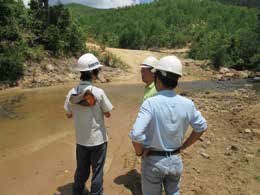
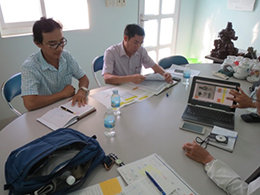
The Oji Group conducts annual visits to the mills and forest sites of wood raw material suppliers to verify the storage and record-keeping of logging permits and related documents that form the basis of traceability reports. In addition, we monitor compliance with our wood raw material procurement guidelines—covering human rights (including labor rights), health and safety, and environmental considerations—through on-site inspections and interviews.
In FY2024, we visited all 36 overseas woodchip suppliers with a record of procurement transactions. As a result of our monitoring, there were zero violations during the year. When any violations or risks are identified through monitoring, we request corrective actions from the suppliers and collaborate with them to drive improvements.
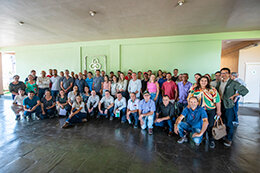
CENIBRA’s Forestation Incentive Program in Brazil
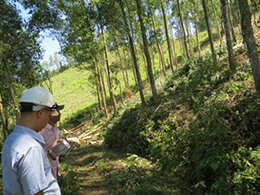
In 1985, CENIBRA launched its Forestation Incentive Program to support small-scale local farmers. The program provides seedlings, fertilizers, technical training and a guaranteed purchase of timber at maturity, helping farmers implement sustainable forest management. Training covers silviculture, pest and disease control, and also addresses social issues such as labor safety, fire prevention and appropriate labor practices, enabling participants to manage their forests in line with certification requirements. CENIBRA also shares best practices through technical seminars and field days.
In 2024, CENIBRA maintained contracts with 558 farmers covering 18,023 hectares of plantation forests, supplying approximately 14% of the wood raw materials delivered to the mill. These long-term partnerships contribute to local employment, income improvement, better living standards and environmental conservation, while also serving as an important and stable source of raw materials for CENIBRA.
CENIBRA has also introduced a satellite-based monitoring system to track the growth and management of contracted forests. This system is used to verify compliance with forest certification standards—including the prevention of illegal logging and the conversion of natural ecosystems—and alerts enable CENIBRA staff to conduct timely field visits and support appropriate management through dialogue with farmers.

Compliance with the Clean Wood Act
In March 2018, the Oji Group completed registration as Class-1 and Class-2 Registered Wood-Related Business Operator under the Act on Promotion of Distribution and Use of Legally Harvested Wood Clean Wood *1(commonly known as the Clean Wood Act).
When procuring wood raw materials and biomass fuels, we verify the legality of our procurement activities by conducting Legality Certification Due Diligence in collaboration with the Japan Paper Association.
- *1 Enacted in May 2017, Japan’s Clean Wood Act aims to prevent the distribution and use of illegally harvested wood and promote the use of legally harvested wood and wood products. The Act defines the scope of applicable wood and wood-related business operators, establishes a registration system, and outlines the responsibilities of both businesses and the national government.
We Are Committed to Fostering Sustainable Supply Chains Through Active Participation in Key Initiatives.
The Oji Group aims to achieve a sustainable supply chain through the disclosure of information. To this end, we are participating in the CDP, a platform that increases companies’ awareness of sustainability, aiming to improve their activities, and CENIBRA in Brazil and KANZAN in Germany are also participating in Ecovadis, an organization that assesses the sustainability of supply chains.